










If you’re looking for the short answer before the coffee finishes brewing, here it is:
Before you walk into a bank, you shouldn’t be thinking about how much cash you need; you should be thinking about how much cash you waste in your operating cycle.
Banks don’t just want to see a healthy balance sheet; they want to see that you understand the “velocity” of your capital. For a manufacturer, this means proving you’ve optimised the gap between paying for raw materials and receiving payment for the finished widget.
If you go to a lender asking for a loan to cover “inefficiency,” the rates will be high. If you go asking for a loan to fuel “growth” backed by tight processes, the doors swing wide open.
But knowing the answer is one thing proving it with data that doesn’t make a credit officer squint is another. Stick around, because we’re about to dive into the pitfalls of “Ghost Inventory,” the secret math of supplier leverage, and how a bit of financial modeling can turn a “maybe” from a bank into a “how much do you need?”
1. The “Hidden Leak” in the Warehouse
Many business owners look at a warehouse full of stock and see “assets.” A bank looks at it and sees “trapped cash” and “risk.”
Before approaching a lender, you need to perform a brutal audit of your Inventory Turnover Ratio. If your raw materials are sitting for 60 days before hitting the assembly line, you are essentially giving your suppliers an interest-free loan while you sweat your payroll.
-
The Pitfall: Carrying “Just in Case” inventory rather than “Just in Time.”
-
The Fix: Segment your inventory. Identify what moves and what gathers dust. Banks love to see that you’ve cleared out the “dead wood” before asking for fresh capital.
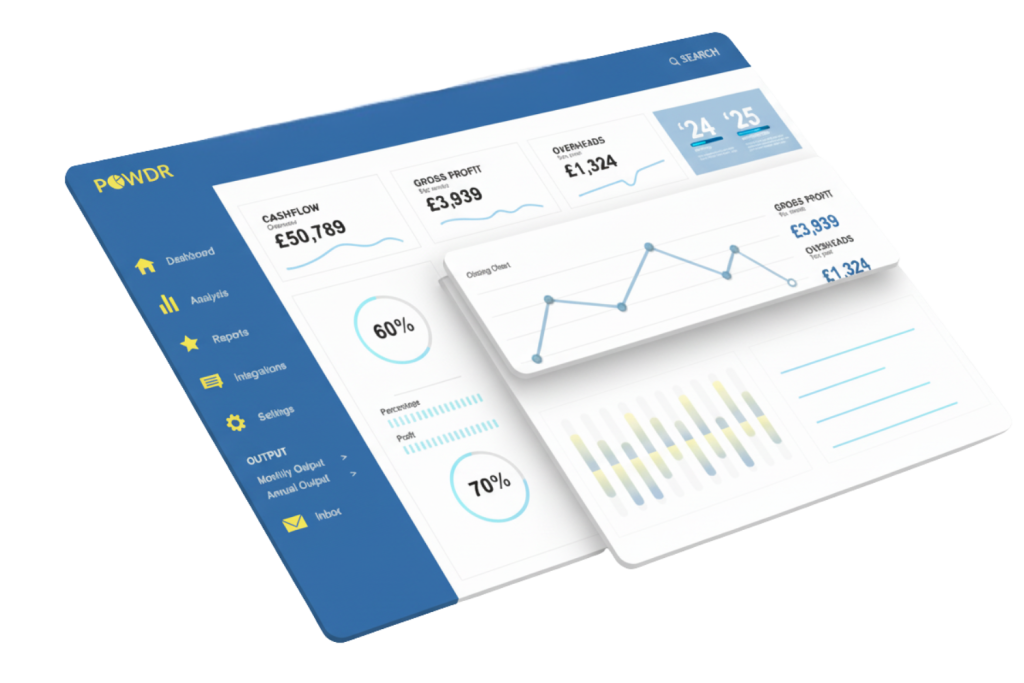
At Powdr, we help manufacturers visualize these cycles. Instead of a static spreadsheet, we build dynamic models that show exactly how a 10% reduction in inventory hold-time impacts your bottom line. Book a Demo with Powdr
2. Receivables: Are You a Manufacturer or a Charity?
If your terms are “Net 30” but your customers are paying in “Net 65,” you aren’t just a manufacturer, you’re a high-risk lender.
Banks look closely at your DSO (Days Sales Outstanding). Before you meet them, tighten your credit control. If you show a lender a trend of decreasing DSO, you are demonstrating “Management Alpha” the ability to exert control over your ecosystem.
-
Pro Tip: Look into Debtor Finance vs. a standard term loan. If your receivables are high-quality, the bank might give you better rates on an invoice discounting facility than a generic line of credit.
3. The Tug-of-War: Accounts Payable Strategy
There is a delicate dance between keeping your suppliers happy and keeping your cash in your pocket.
Manufacturers often fall into the trap of paying early to “be a good partner” without getting a discount in return. If you aren’t getting a 2% discount for early payment, hold onto that cash until the final hour.
Working Capital Formula to Memorize:
(Where CCC is your Cash Conversion Cycle, DIO is Days Inventory Outstanding, DSO is Days Sales Outstanding, and DPO is Days Payables Outstanding.)
Your goal is to get that $CCC$ number as low (or even as negative) as possible.
4. Don’t Let “Growth” Be Your Downfall
Here is the paradox: Growth sucks cash. In manufacturing, a massive new contract is often the most dangerous thing that can happen to your liquidity. You have to buy the materials, pay the labor, and ship the goods long before the first invoice is settled.
Before going to the bank, run a Sensitivity Analysis. What happens if your biggest new client pays 15 days late? What if raw material costs spike by 5%? If your financial model breaks under those scenarios, the bank’s model will too.
5. The “Bank-Ready” Narrative (The Powdr Way)
When you sit down with a lender, they will ask for your three-year projections. Most businesses provide a “hockey stick” graph (flat then suddenly up) with very little substance underneath.
To stand out, you need to show Integrated Financial Modeling. This means your Profit & Loss, Balance Sheet, and Cash Flow statement are all “talking” to each other. When you change your sales target, your “Working Capital” requirement should automatically update.
At Powdr, we specialise in this level of detail. We don’t just give you a PDF; we give you a tool that lets you show the bank: “If we win this contract, here is exactly how our working capital will behave.” It turns a leap of faith into a calculated move.
Ready to impress your lender? Don’t walk into the bank with a static PDF. Show them you’ve mastered your numbers. See how Powdr transforms your financial story – Book a Demo
6. Common Pitfalls: The “Ostrich” Effect
The biggest mistake finance teams make is ignoring the “WIP” (Work in Progress).
Items stuck on the factory floor are the most expensive form of working capital because they have “absorbed” labor and overhead costs but cannot yet be sold or used as collateral. If your WIP is growing faster than your finished goods, you have a bottleneck. A bank will see this as a sign of operational inefficiency.
7. Sources and Standards
To ensure you’re aligned with industry benchmarks, it’s worth reviewing the standards set by major financial institutions and accounting bodies:
-
Investopedia on Cash Conversion Cycles: A deep dive into the $CCC$ metrics used by credit analysts.
-
The ICAEW (Institute of Chartered Accountants in England and Wales): Provides guidance on “Effective Working Capital Management” for UK SMEs.
-
British Business Bank: Offers resources on choosing the right type of finance for manufacturing cycles.
Final Thoughts: The Mindset Shift
Before you ask for a loan, ask yourself: “If I were the bank, would I trust this company to manage an extra £500k?”
If your working capital is currently a mess of late invoices and dusty shelves, the answer is likely no. But if you can show that you’ve optimized your cycle, tightened your terms, and modeled your future risks, you aren’t just a borrower you’re a partner.
Working capital management isn’t a year-end chore; it’s the heartbeat of your factory.
Want to see the pulse of your business? Let’s build a model that works as hard as your production line does.